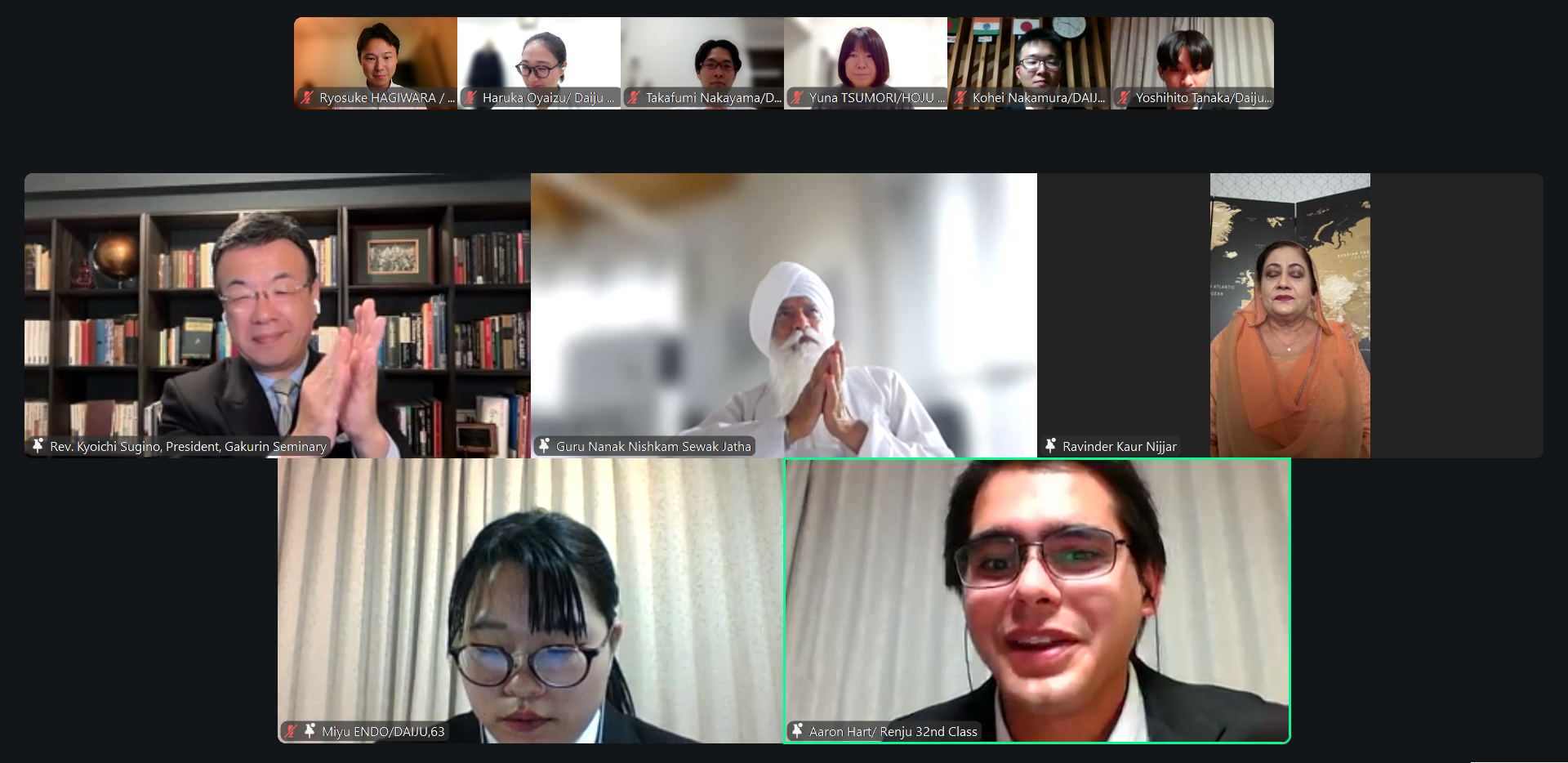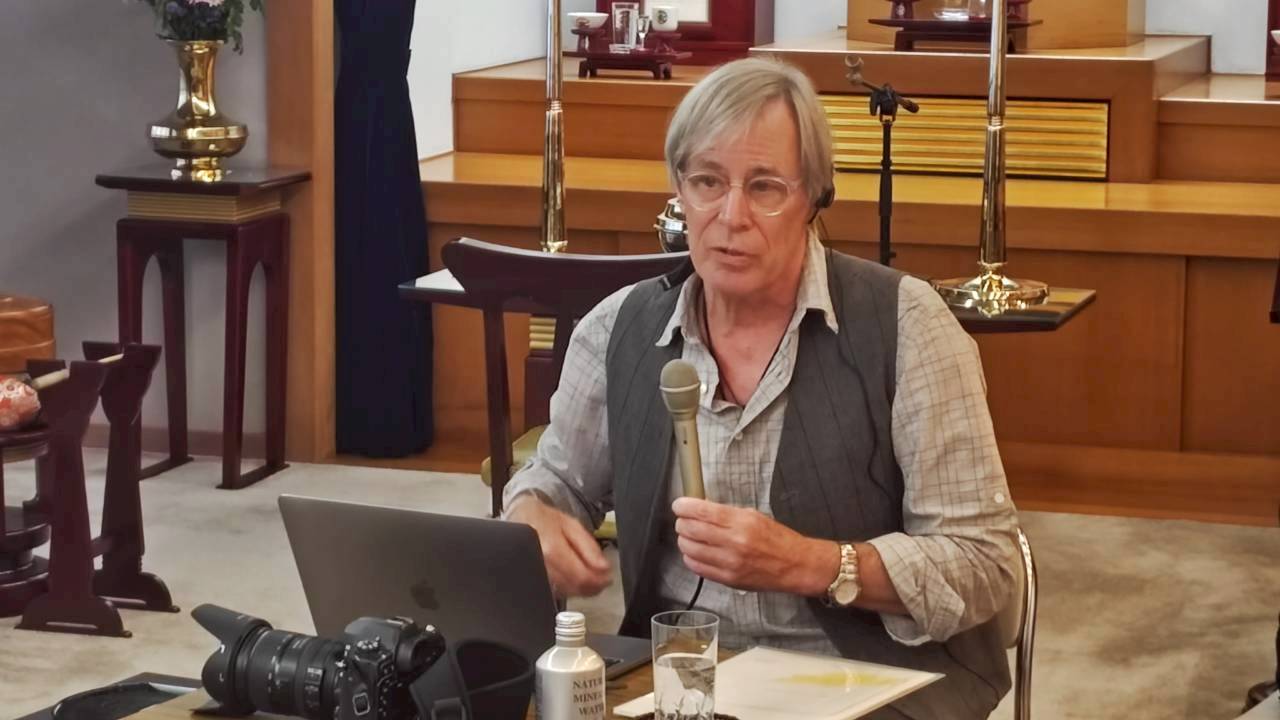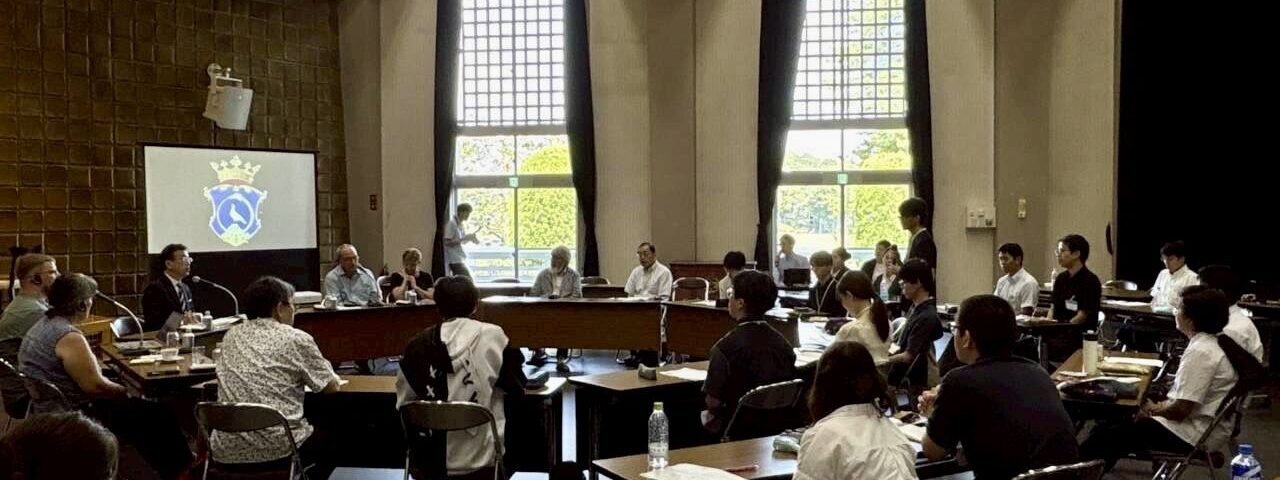

On February 20, 2026, the Dharma Journey Presentation of the 31st Cohort of the International Program was held at the Gakurin Ome Campus. As the culmination of two years of study and practice, the program provided an opportunity for seminarians to share their understanding of Buddhism and the teachings of the Lotus Sutra through the lens of their own life experiences. More than fifty participants from Japan and abroad joined the gathering, both in person and online.
During the presentation, seminarians from diverse cultural and religious backgrounds spoke about the insights they had gained and the personal transformations they had experienced through two years of sincere self-reflection and practice. A common theme emerged throughout their stories: the process of coming to realize, through direct experience, the Buddhist teaching that all people possess Buddha-nature.
One Bangladeshi seminarian shared his journey from being judgmental of others to learning to examine his own heart. His story resonated deeply with the universal struggles people face in relationships and daily life. Raised in a Theravada Buddhist family, he grew up in an environment closely connected to Buddhism and even entered monastic life at the age of ten. Reflecting on his life before coming to Japan, however, he admitted that he had often been trapped by a judgmental attitude toward others.
He explained that he would become irritated when people failed to follow rules and felt strong resentment toward those he perceived as lacking courtesy or respect. He was also troubled by people who appeared devout in temples yet spoke negatively about others outside of religious settings. Such experiences led him to focus on the inconsistencies and shortcomings of those around him. Looking back, he realized that he often excused his own mistakes while attributing others’ mistakes solely to their character, maintaining a critical perspective toward those around him.
After entering Gakurin, he began communal life in Japan. While he was impressed by the orderly environment, he initially felt constrained by the emphasis on punctuality, discipline, daily responsibilities, and assigned duties such as cleaning. At first, rules seemed to restrict his freedom.
Gradually, however, his perspective began to change as he observed senior seminarians carrying out their responsibilities with sincerity and dedication. He saw them cleaning carefully even in places no one would notice and faithfully fulfilling their assigned roles. Through these examples, he came to understand that discipline is not something imposed from outside but a practice for cultivating and harmonizing one’s own mind.
Cleaning, he realized, was not merely a task but an opportunity to remove the impurities within oneself. Carrying out one’s responsibilities with sincerity became a form of spiritual training that nurtured personal growth.
Living with people from different cultures and backgrounds also taught him that his own viewpoint was not the only valid one. Whenever he became upset with someone, he learned to ask himself: “Is the other person truly at fault, or am I simply attached to having things go my way?”

Cardinal Charles Bo of Myanmar (left) Gakurin Seminarian from Bangladesh (right)
As part of this practice, he began with something simple: changing the way he greeted others. Setting aside embarrassment and hesitation, he made a conscious effort to look people in the eye and greet them with a smile. Through this small but consistent practice, he noticed gradual changes in his relationships and in the atmosphere around him.
Six months after arriving in Japan, he experienced a profound personal loss when his father suddenly passed away. Unable to return home, he could neither see him one last time nor speak with him before his death. The experience brought immense sorrow. Yet during this difficult period, fellow seminarians and senior students supported him like family. Through their kindness, he learned that human connection can be found even in suffering, and that understanding one’s own grief enables one to empathize more deeply with the pain of others.
In closing, he expressed his determination to contribute to building a society in which people can respect one another as human beings, regardless of differences in religion or ethnicity.
His presentation offered an honest account of a young man’s journey of self-examination and gradual transformation through everyday practice. It demonstrated that learning at Gakurin extends far beyond the acquisition of knowledge, fostering personal growth and a commitment to contributing to society.
Learning at Gakurin is not limited to classroom lectures. It unfolds through a comprehensive educational experience that includes communal living, practical training, and daily human interactions. Each aspect provides an opportunity for seminarians to reflect on self-centered tendencies and embody the Buddhist value of living in harmony with others. This educational environment deepens the understanding of Engaged Buddhism while cultivating the foundations for dialogue and cooperation across religious and cultural differences.
The Dharma Journey Presentation provided a vivid example of how personal spiritual awakening can develop into a sense of social responsibility and a broader global perspective. It illustrated the potential for dialogue and cooperation that transcends religious boundaries and contributes to addressing the shared challenges of humanity.
Graduates of the International Program return to their communities prepared to engage with diverse groups of people, respecting religious and cultural differences while contributing to the creation of inclusive and harmonious societies. It is our hope that their continued efforts, together with interreligious cooperation and international collaboration, will help build a more sustainable and peaceful future for all.