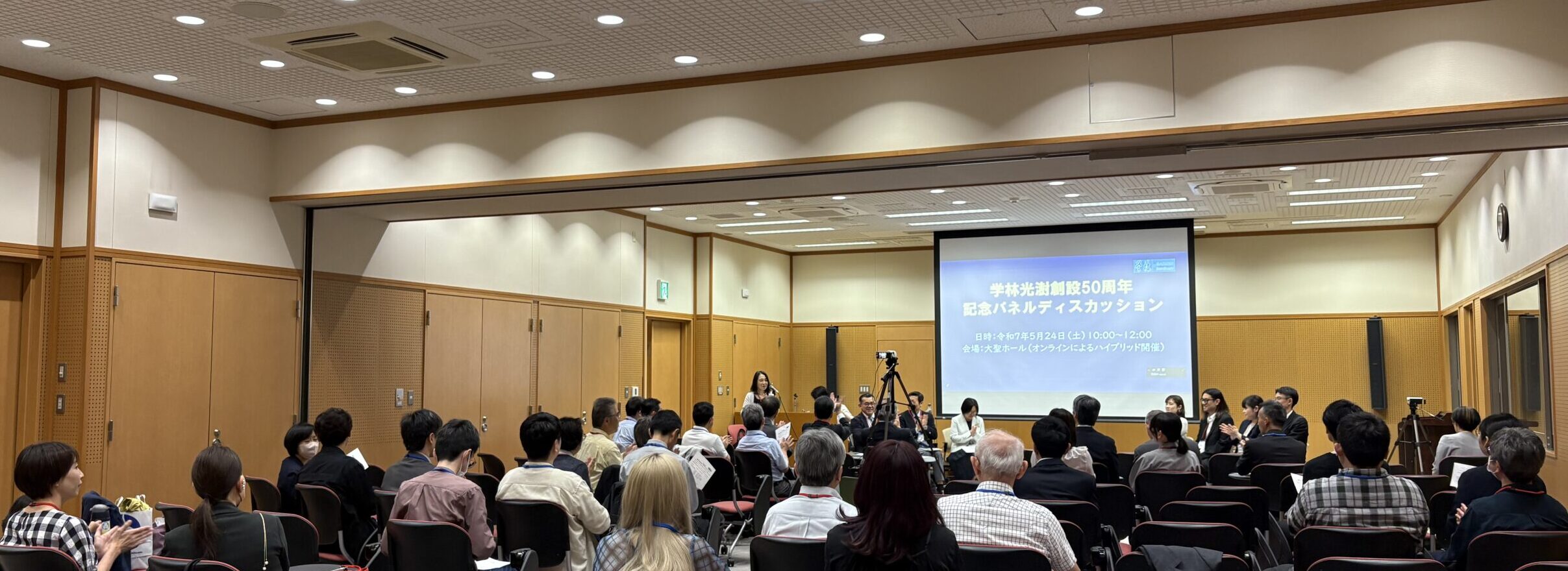

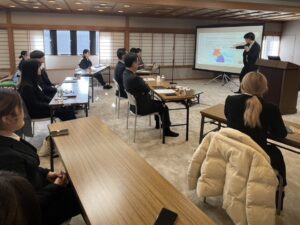
On December 6, 2025, a specialized research presentation conference by undergraduate students of Gakurin Kōju was held at the Gyōgakuen Campus.Grounded in the guiding spirit of Gakurin Kōju—“to bestow light upon the world”—this conference served as the culmination of each student’s academic journey, providing a forum to reflect deeply on one’s mission in life while engaging, from a Buddhist perspective, with the pressing challenges facing contemporary society and the global community. Through their research, students sought creative insights, solutions, and proposals rooted in Buddhist thought.
In the 2025 academic year, research presentations spanned a wide range of fields, including religion, history, education, peace studies, economics, psychology, and ethics. What united these diverse inquiries was a shared conviction: Buddhist spirituality is not merely a body of ideas or doctrines, but a living perspective that must be connected to the realities of the present moment and translated into action and social transformation.
Among the presentations were studies that reexamined the structures of growth and decline within organizations through an analysis of the historical development of religious institutions, as well as research that explored the process of ethnic reconciliation in Rwanda in dialogue with the teachings of the Dhammapada and the Lotus Sutra. These studies illuminated an earnest engagement with human suffering—facing past tragedies and conflicts squarely while seeking pathways toward reconciliation, coexistence, and hope for the future.
Other presentations addressed contemporary issues such as inclusive education, self-esteem, and well-being, reinterpreting them through the lenses of Buddhist philosophy and virtue ethics. The fundamental question of how to build a society in which each person is respected and able to live together with others emerged not only as an educational concern, but as a vital proposal for society as a whole.
The scope of inquiry extended beyond Japan to encompass global perspectives, including religious cooperation in peacebuilding in Northeast Asia, comparative analyses of diverse models of the separation of religion and state, and studies on Buddhist economics and the relationship between engaged Buddhism and management practices. These presentations examined how Buddhist spirituality might open pathways for dialogue and cooperation amid the divisions and value conflicts of the contemporary world.
At the same time, themes such as the understanding of suffering, religious music, and the history of religious revival reflected a deeper return to fundamental questions of human existence, inviting renewed reflection on the essential role of religion itself.
Underlying all of these studies was a sincere and shared question held by each Gakurin Kōju student: “As one who studies Buddhism, what should we be thinking now, what should we be expressing, and how should we engage with society?”
Grounded in Buddhist spirituality while refusing to avert their gaze from the realities of the world—even when confronting difficult and complex issues—this stance embodies the very essence of learning at Gakurin Kōju and represents the living practice of “bestowing light upon the world.”
This research presentation conference became a powerful moment in which Gakurin Kōju students cast a ray of light toward the future, vividly demonstrating how Buddhist spirituality can offer hope and meaningful guidance to society and the wider world.